How to Choose IC Rated vs Non IC Rated Recessed Lights

Time:2026-09-25 Author:Charlotte
0%

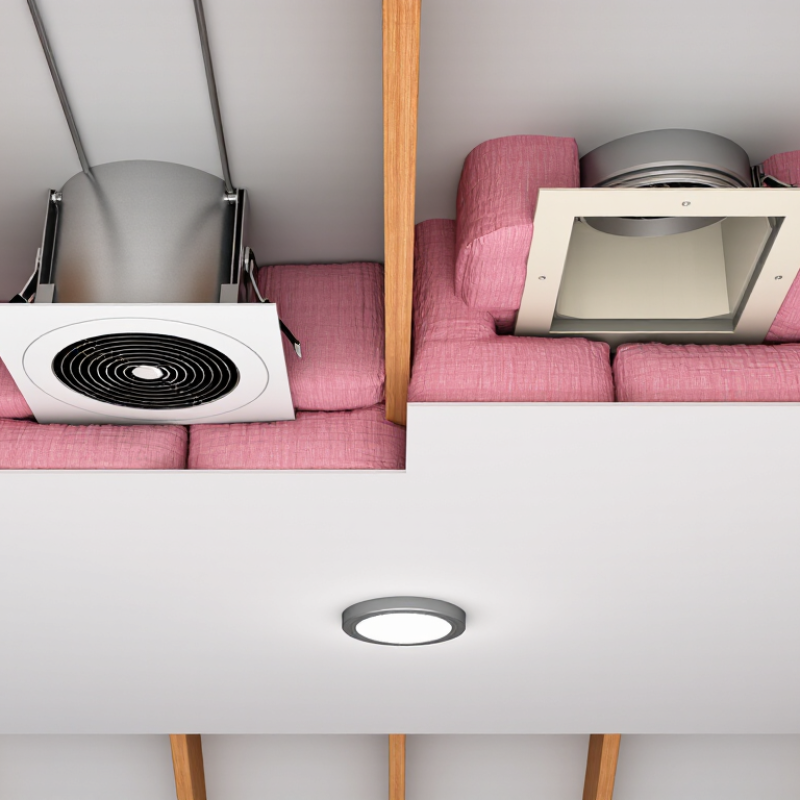
Choosing recessed lights means looking beyond the trim you see from the room. Above the ceiling, insulation may sit close to the fixture, and heat needs a safe path away. That detail can affect which light is suitable. What is the difference between ic rated and non ic rated recessed lights? An IC-rated fixture is designed for direct contact with insulation when installed as specified. A non-IC-rated fixture generally needs clearance from insulation and other materials. Check the fixture label and installation instructions; appearance alone cannot tell you.

A useful choice starts with the actual ceiling conditions. Look for loose-fill insulation, batts pressed against the housing, tight joist bays, and any existing fixture markings. If insulation covers a non-IC-rated light, simply fitting a new trim ring does not solve the problem. Details matter. Product designs vary, and “IC-rated” does not automatically mean every installation is safe or airtight. The manufacturer’s instructions and applicable building requirements still guide placement and clearances. When the label is missing or the wiring looks uncertain, pause and ask a qualified electrician to assess it. That may feel cautious, even inconvenient. But a careful check is cheaper than guessing around a hidden heat source. This guide explains the practical differences, what to inspect, and how to choose a recessed light that suits your ceiling rather than just your décor.
How to Choose IC Rated vs Non IC Rated Recessed Lights

Identify IC and Non-IC Ratings Under UL 1598

To identify IC and non-IC recessed lights, start with the fixture’s label and installation instructions. Under UL 1598, luminaires are evaluated for construction, performance, and required markings. An IC-rated fixture is designed and tested for contact with insulation under its specified installation conditions. A non-IC fixture must maintain the clearance stated on its label; do not assume one universal distance. Check carefully.

The housing alone can be misleading. Look for clear “IC” or “Type IC” wording on the label, then confirm the model’s instructions. If the marking is missing or unreadable, ask a qualified electrician or the manufacturer for the exact documentation before covering the housing with insulation. A small label can matter more than a familiar-looking metal can.

Fire data offer useful context, but not a direct comparison of fixture ratings. The National Fire Protection Association’s Home Fires Involving Lighting Equipment report estimated an annual average of 7,400 U.S. home fires involving lighting equipment during 2014–2018, with 12 deaths and 120 injuries. Those figures include many lighting types and do not show that non-IC fixtures caused the fires. Still, they support treating clearance and installation directions as practical safety details, not paperwork.

Check Ceiling Insulation Type, Depth, and Fixture Labeling

Start with the insulation above the ceiling. Is it fiberglass batts, loose-fill cellulose, or another material? Its type affects how easily it can shift or cover a fixture, but it does not determine the fixture’s rating. An IC-rated recessed light is designed for contact with insulation when installed as directed. A non-IC-rated light generally needs a clear space around it. The required distance varies, so check the fixture’s instructions rather than guessing. Loose-fill insulation can hide the housing and its label. That can be awkward.

Measure the space above the ceiling, too. Check the cavity depth, joist position, and any obstructions, then compare them with the fixture’s required housing depth and clearance. A shallow cavity may not fit a standard housing, even if its rating suits the insulation. Look for an IC marking on the fixture label or installation sheet; trim appearance alone is not reliable evidence. Labels matter. If the marking is missing or unreadable, don’t assume the light is IC-rated. I’d pause here rather than rely on memory—older installations can be hard to identify. When the label or clearance requirements remain unclear, have a qualified electrician inspect the fixture before insulation is placed around it.

How to Choose IC Rated vs Non-IC Rated Recessed Lights

How to read this chart: IC-rated fixtures may contact insulation when their label permits it. Non-IC fixtures typically require at least 3 inches of clearance from insulation. Check the fixture label and local code; insulation depth affects the available ceiling space but does not determine the fixture’s rating.

Apply the Common 3-Inch Clearance Rule for Non-IC Fixtures

How to Choose IC Rated vs Non IC Rated Recessed Lights

Apply the Common 3-Inch Clearance Rule for Non-IC Fixtures

A non-IC recessed light should not touch attic insulation. A common guideline is to keep insulation at least three inches from the fixture’s sides and top. That gap helps limit heat buildup around the housing. Check the fixture label and installation instructions before measuring; the three-inch rule is not universal. Requirements can vary by model and location.

In an attic, use a tape measure to check the space around each housing, including near joists and stored items. Keep insulation, loose paper, and other materials clear. Don’t assume a metal can is safe to cover. It may look sturdy, but appearance tells you little about its rating. If insulation has shifted over time, restore the required clearance before switching the light on. A simple check can prevent trouble.

IC-rated fixtures are designed for contact with insulation when installed as directed. Non-IC fixtures need separation, which can be harder to maintain in a tight ceiling cavity. If you cannot preserve the specified gap, consider an IC-rated fixture instead. I’ve found attic measurements can be awkward, and one side is easy to miss. When the label is unreadable or the installation is unclear, ask a qualified electrician to inspect it.

Compare IC and Non-IC Options for Thermal Safety and Energy Use

IC-rated and non-IC-rated describe how a recessed light can be installed near ceiling insulation. An IC-rated fixture is designed for direct contact with insulation, when installed as instructed. This can simplify work in an insulated attic ceiling. Check the fixture’s label and installation instructions; the rating is not a substitute for correct wiring or clearances around other materials.

Non-IC-rated fixtures generally need insulation kept at the specified distance. That gap can leave a bare patch above the ceiling. Keep insulation clear. For thermal safety, follow the exact clearance requirements rather than guessing from the fixture’s appearance. A low-heat LED lamp does not automatically make a non-IC housing safe to cover.

The rating alone does not determine energy use. An airtight IC-rated fixture may help limit warm or cooled air leaking into an attic, but savings depend on the whole ceiling and installation. Look for airtightness information, choose compatible lamps and dimmers, and seal openings as directed. It is easy to focus only on IC versus non-IC and miss the bigger issue: a small gap around a housing can still affect comfort and energy use.

How to Choose IC Rated vs Non IC Rated Recessed Lights: Compare IC and Non-IC Options for Thermal Safety and Energy Use

Comparison Factor IC-Rated Recessed Lights Non-IC-Rated Recessed Lights
Meaning of the rating Designed and listed for installation where insulation can be in direct contact with the luminaire, subject to the product’s installation instructions. Not listed for direct contact with insulation. Required separation from insulation and other materials depends on the product’s listing and instructions.
Thermal safety Suitable for insulated ceiling cavities when installed as directed. The IC rating helps address heat buildup around the fixture. Insulation placed too close can restrict heat dissipation and create an overheating risk. Maintain the specified clearances.
Typical application Commonly used in ceilings with insulation above the fixture, including many insulated attic and exterior-ceiling assemblies. Used where the ceiling cavity is uninsulated or where the fixture can maintain all required clearances from insulation and other materials.
Insulation clearance Insulation may generally touch the fixture only when the product is specifically marked and installed for that use. Follow the label and instructions. Keep insulation away by the distance stated in the product instructions. Do not assume one clearance applies to every model.
Air leakage and energy use An IC rating alone does not mean the fixture is airtight. An airtight or ICAT listing may help reduce air leakage when properly installed and sealed. Some models allow air movement through the ceiling opening. An airtight, gasketed design can reduce leakage, but check the product’s specific listing.
Lighting energy consumption The IC rating does not determine wattage or efficiency. Compare the light source’s input watts, delivered lumens, and efficacy. Likewise, the non-IC rating does not determine energy consumption. Compare the same lighting performance measures when selecting a fixture.
Installation considerations Confirm the ceiling assembly, insulation type, required enclosure, and any restrictions in the fixture instructions. Use a qualified installer when needed. Confirm the required insulation clearances and keep the area around the fixture unobstructed as specified. Check applicable local codes.
Best choice when Insulation will be present in the ceiling cavity and the selected fixture is explicitly marked for insulation contact. The fixture is installed in a suitable uninsulated space, or the required clearances can reliably be maintained.

Important: Ratings and clearance requirements vary by product. Check the fixture’s label and installation instructions, and follow applicable local building and electrical codes. IC and airtight (ICAT) are separate considerations; verify each rating independently.

Verify Local Code, Manufacturer Instructions, and Installation Clearances

A recessed light’s IC rating tells you whether insulation may touch its housing under the conditions stated by the manufacturer. Non-IC models generally require insulation to stay a specified distance away. Do not judge the rating by the trim or the fixture’s appearance. Check the label. Confirm the exact model number, since similar-looking housings can have different requirements.

Read the installation instructions before cutting the ceiling. They should show required clearances from insulation and combustible materials, along with any limits on nearby framing or other components. In an attic, measure the gap around the housing rather than guessing from below. IC-rated does not mean every part can be covered without restriction; follow the stated installation details. Small differences matter.

Local building and electrical codes may add requirements or define acceptable installations differently. Check with your local authority or a qualified electrician, especially when replacing older fixtures or working near a vapor barrier. Keep the instructions with the project notes. It is easy to assume an existing opening is suitable, but old wiring, tight joist spacing, or added insulation can change the situation. Recheck before closing the ceiling.

FAQS

What does an IC rating mean for a recessed light?

An IC-rated housing may touch ceiling insulation when installed exactly as instructed. Check the label and model number.

How is a non-IC fixture different?

A non-IC housing usually needs a specific air gap from insulation. Insulation must stay clear of the housing.

Can low-heat LED lamps make a non-IC fixture safe to cover?

No. A low-heat lamp does not remove the housing’s clearance requirements. Follow the fixture instructions.

Does an IC rating automatically reduce energy use?

No. The rating mainly addresses insulation contact and thermal safety. Energy savings depend on the entire ceiling assembly.

Can an airtight recessed light improve comfort?

It may reduce warm or cooled air leaking into the attic. Small openings around the housing can still affect comfort.

What should I check before cutting the ceiling?

Read the installation instructions and locate required clearances. Check nearby framing, insulation, wiring, and combustible materials.

How can I verify clearance in an attic?

Measure around the housing from above. Do not guess from the room below. Small differences matter.

Should local requirements be checked during replacement work?

Yes. Local codes may add requirements, especially near vapor barriers or older wiring. A qualified electrician can identify missed details.

Conclusion

Choosing the right recessed light begins with understanding what is the difference between ic rated and non ic rated recessed lights. IC-rated fixtures are designed to be installed in direct contact with ceiling insulation, while non-IC-rated fixtures generally need open space around them to dissipate heat. Check the fixture label and installation instructions for its rating, and inspect the ceiling’s insulation type and depth before choosing a fixture. Never rely on appearance alone to determine whether a light is safe for an insulated ceiling.

For many non-IC fixtures, a common guideline is to maintain at least 3 inches of clearance from insulation and other specified materials, but the exact requirements depend on the fixture instructions and local code. IC-rated options can make insulation placement simpler and may help reduce energy loss when the ceiling assembly is properly sealed. Before installation, verify the applicable requirements and all stated clearances to support safe operation and good thermal performance.

Charlotte

Charlotte

Charlotte is a seasoned marketing professional with a deep understanding of the company's portfolio and a passion for elevating its presence in the market. With a keen eye for detail and a commitment to excellence, she ensures that our professional blog is regularly updated with insightful articles......